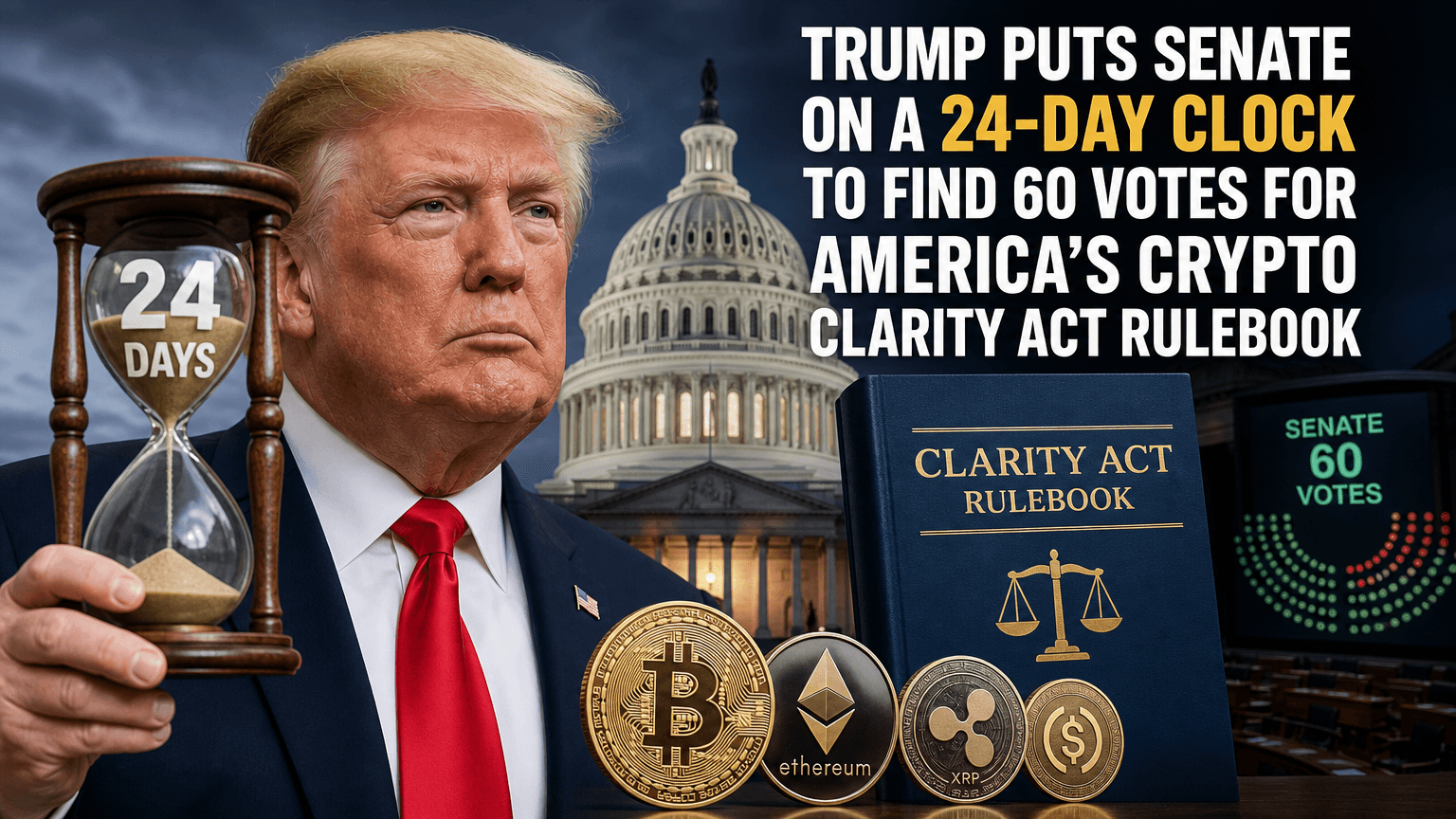
Trump puts Senate on a 24-day clock to find 60 votes for America's crypto CLARITY Act rulebook
The CLARITY Act Faces Critical Legislative Hurdles
The CLARITY Act, designed to establish a federal framework for cryptocurrency trading and issuance, is facing significant hurdles that could delay its passage. Ethics disputes, stablecoin rewards, and protections for developers are among the unresolved issues. As the Senate heads towards its August recess, no floor vote has been scheduled, leaving the measure in a precarious state.
Pressure from the White House to Pass the CLARITY Act
The urgency of passing the CLARITY Act is not lost on the White House. President Donald Trump emphasized the necessity of the legislation in light of the global competition with China over cryptocurrency and artificial intelligence. Trump’s call to action aims to rally Congress to approve the legislation before the August recess, portraying it as essential to maintaining U.S. leadership in these cutting-edge sectors.
Urged Support from Federal Regulators and Industry Advocates
The importance of the CLARITY Act is further underscored by key figures like Mike Selig, Chairman of the Commodity Futures Trading Commission (CFTC), who argues for clear statutory standards for digital assets to preserve U.S. leadership in financial technology. The bill would distribute oversight responsibilities between the SEC and the CFTC, enhancing the regulatory clarity and stability of the burgeoning digital asset market.
Challenges Within Congress: Ethics and Industry Tensions
Despite progress, the CLARITY Act has stalled due to unresolved ethical concerns, particularly regarding government officials’ involvement in digital asset businesses, as highlighted by Trump's extensive financial engagements in the sector. Such ethical questions, coupled with the banking industry's resistance to stablecoin provisions, reveal the nuanced challenges lawmakers face in crafting a comprehensive and balanced legislative framework.
Developer Protections and Law Enforcement Concerns
Another contentious area is the protection of software developers. The current proposal aims to shield developers from unnecessary liability, ensuring innovation is not stifled. However, law enforcement worries that overly broad exemptions could inhibit financial crime investigations. Support from the National Organization of Black Law Enforcement Executives (NOBLE) provides some backing to the developers’ protection approach, though it leaves lingering concerns from other entities.
The Political Climax and Legislative Calendar Constraints
The legislative clock is ticking, and supporters of the CLARITY Act face the daunting task of achieving a bipartisan coalition necessary to advance the bill. The political landscape is complex; recent shifts and absenteeism among Senators are reducing the maneuvering space available to pass the act. As time runs short, the upcoming recess and midterm elections loom large over the legislative process, highlighting the need for swift and decisive legislative negotiation.
In conclusion, the CLARITY Act seeks to provide a necessary regulatory framework for cryptocurrencies, crucial for maintaining U.S. leadership in global financial markets. However, the unresolved issues of ethics, stablecoin rewards, and developer protections could make achieving consensus challenging. As the Senate's timetable tightens, the ability to reconcile these differences will ultimately determine the act's passage and its effects on the financial landscape.
15.07.2026