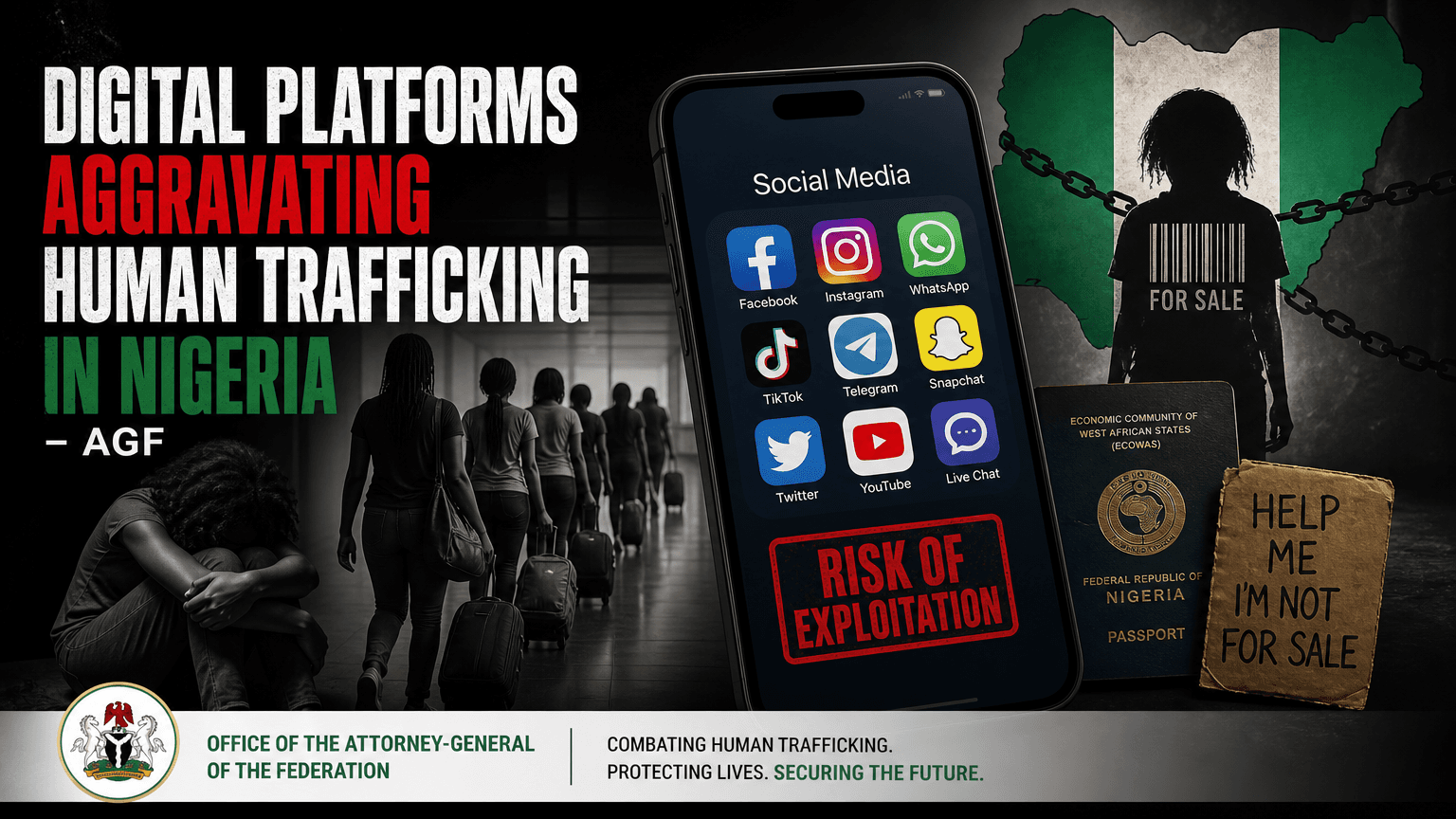
Digital platforms aggravating human trafficking in Nigeria -- AGF - Diaspora Digital Media (DDM News) - Nigeria Breaking News, Africa and World News and Updates
Challenges Arising from Human Traffickers’ Use of Digital Platforms in Nigeria
The digital age has ushered in unprecedented challenges in the fight against human trafficking, a sentiment echoed by the Attorney-General of the Federation and the Minister of Justice, Lateef Fagbemi. He recently highlighted this growing concern during the 2026 World Day Against Trafficking in Persons, emphasizing the impact of technology on trafficking dynamics in Nigeria.
Shifting Methodologies: The Move from Physical to Digital
Mr. Fagbemi pointed out a critical shift in trafficking methodologies: a transition from traditional, physical approaches to modern, digital platforms. Social media, encrypted communication channels, and fraudulent recruitment websites are increasingly the tools of choice for traffickers. This transition complicates traditional legal and institutional responses, necessitating an evolution in enforcement strategies.
The Lure of False Promises and the Trap of Scam Compounds
Nigerian graduates find themselves particularly vulnerable to traffickers' promises of lucrative overseas jobs in burgeoning fields such as technology, digital marketing, and cryptocurrency trading. These promises, however, often serve as bait, leading victims into scam compounds where their freedoms are severely restricted.
Strengthening Legal Frameworks and International Cooperation
In response to these challenges, Mr. Fagbemi stressed the importance of robust enforcement of existing anti-trafficking and cybercrime laws. The Trafficking in Persons (Prohibition) Enforcement and Administration Act, 2015, forms the backbone of Nigeria's anti-trafficking efforts, while complementary laws such as the Cybercrimes Act target online criminal activities. The Money Laundering (Prevention and Prohibition) Act, 2022, further supports efforts by enabling the tracing and confiscation of trafficking proceeds.
NAPTIP's Role in Combating Trafficking
The National Agency for the Prohibition of Trafficking in Persons (NAPTIP) remains pivotal in combating trafficking. With 839 convictions since its inception and recent successful operations in 2026, NAPTIP demonstrates the efficacy of Nigeria's anti-trafficking framework. Furthermore, the agency's Cyber Response Team actively disrupts trafficking-related scam centers.
Combating Global Networks through Collaboration
Nigeria is committed to international anti-trafficking agreements which enhance collaboration with regional and global partners. This collaboration is crucial, given the extensive networks involved in trafficking people into Southeast Asian scam compounds where billions in illicit revenue are generated.
The Role of Technological and Public Cooperation
Mr. Fagbemi was clear: legislation alone is insufficient. Technology companies, telecommunications providers, and financial institutions must collaborate with law enforcement authorities by sharing intelligence and preserving digital evidence. Public awareness and education also play vital roles in preventing trafficking. Parents, educators, and community leaders are encouraged to educate youths about the dangers lurking behind false online job offers.
Media's Influence in the Anti-Trafficking Narrative
Finally, Mr. Fagbemi called upon the media to amplify the voices of trafficking survivors and sustain public awareness of these evolving methods. Such efforts are crucial to maintaining a vigilant society capable of combating these insidious practices.
The Continuing Battle Against Trafficking
The theme of this year’s event, "Trapped Behind the Scam," underscores the importance of addressing the digital dimensions of human trafficking. While significant strides have been made, the continued commitment of various stakeholders will be essential in adapting to and overcoming these new challenges.
31.07.2026